


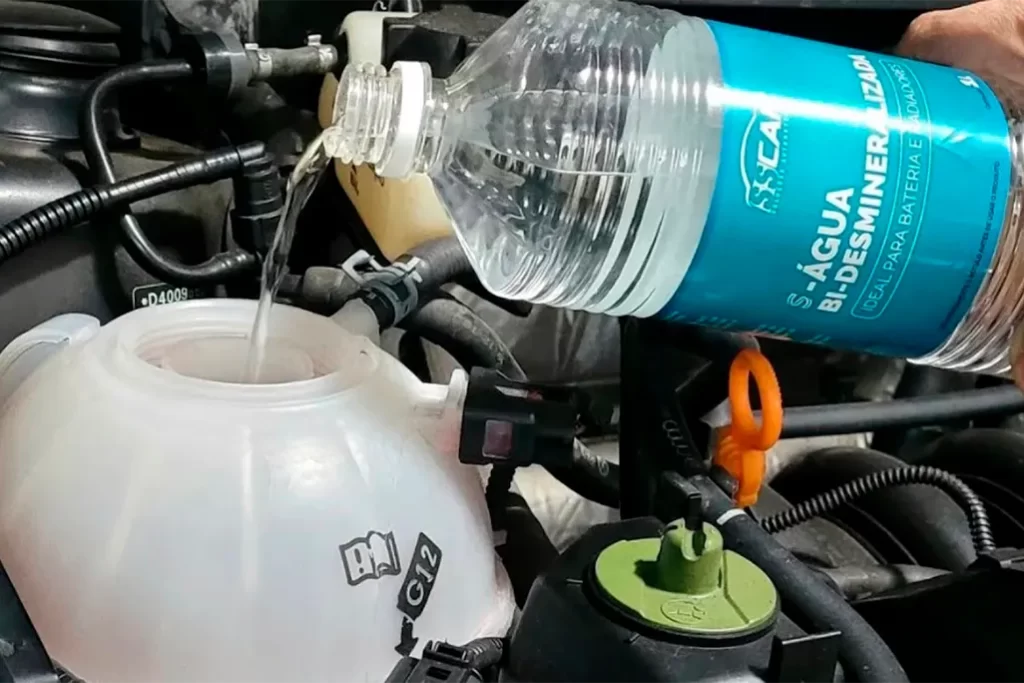
Demineralized water, also known as deionized water, is characterized by its purity, being free of minerals, ions, and heavy metals. It is commonly used in industrial equipment and as an ingredient in the manufacturing of beverages, food products, and cosmetics. It’s important to highlight that although pure, it is not suitable for consumption, as it does not quench thirst and is useless to the body due to the absence of essential mineral salts needed for maintaining bodily balance.
The demineralization process can be carried out in several ways, including:
Distillation: Considered the first method used for removing salts from water, though it has high energy consumption and does not completely eliminate salt concentrations.
Ion Exchange Processes: This system includes cationic, anionic, and mixed beds. In the first two, 99.5% of the salts are removed, and the residual salts can be extracted in the mixed bed.
This treatment allows ions dissolved in water—such as magnesium, chloride, silica, and calcium—to be removed. The system uses ion exchange resins—small plastic spheres whose surfaces are bonded to ions used in the exchange.
Water must pass through one or more beds until they become saturated with ions and, through a chemical process, demineralization is achieved.
In addition to the cationic and anionic filters, the demineralizer includes a pressurization system, a zeolite filter to retain solids, a carbon filter, and an electrical conductivity meter.
Reverse Osmosis: A water filtration process that uses a special membrane to force water to flow from a more concentrated medium to a less concentrated one, separating it from the salts.
One of its greatest advantages is cost-efficiency, since it requires only small amounts of cleaning products for membrane maintenance every 60 to 90 days, and it produces water with a high level of purity. It also offers excellent reuse potential, recovering 50 to 80% of effluents.
A drawback is that it demands extensive care, including proper pre-treatment and specialized membrane monitoring to avoid microorganism growth.
Electrodialysis: A process used when the main goal is achieving low water conductivity. It does not use chemicals; instead, it uses electric currents to move ions through selective ion exchange membranes, removing them from the water. It is often used in the pharmaceutical industry.
Water Softening: Typically used to treat hard water, which contains excess calcium and magnesium. Although it also uses ion exchange, its application is more limited because it cannot remove other salts like chloride and silica. It’s commonly used in low-pressure boilers or in processes where foam formation must be avoided.